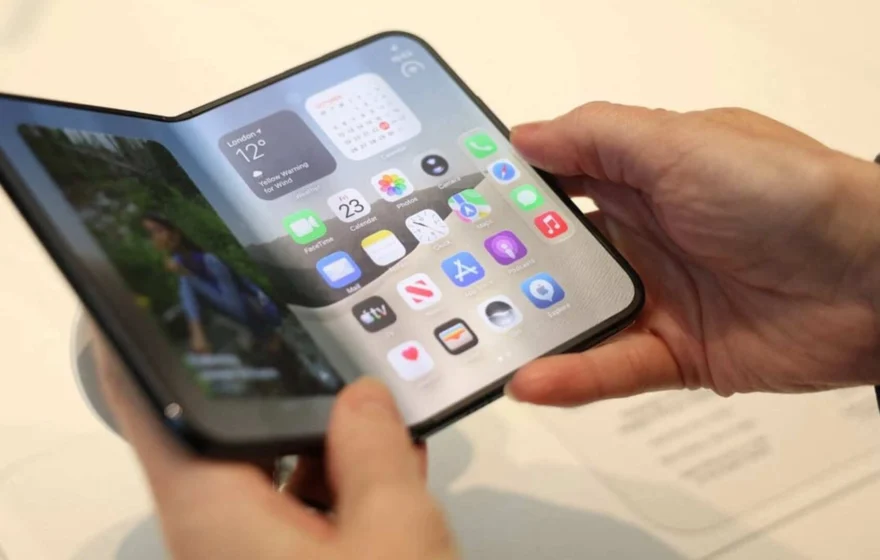
Samsung appears to be getting an unexpected lift from the arrival of its biggest rival in the foldable phone market. Sales of the Galaxy Z Fold8 in South Korea rose by more than a fifth in the week after Apple began shipping its first foldable handset, the iPhone Duo, according to reports from South Korea. The timing has drawn attention because that first week also brought complaints from some buyers about problems with the inner folding screen of the new Apple device.
Apple started shipping the iPhone Duo on October 23, and between October 23 and October 29, Galaxy Z Fold8 sales in South Korea increased by more than 20 percent compared with the previous week. Samsung had already seen a similar, though smaller, pattern in September, when Galaxy Z Fold8 sales rose by roughly 10 percent week over week after Apple announced the iPhone Duo. The Galaxy Z Fold8 is also considerably cheaper in South Korea than its new Apple rival, which alone gives price-conscious buyers a straightforward reason to choose Samsung.
iPhone Duo Display Problems Raise Concerns
The concern at the centre of the story relates to the inner display of the iPhone Duo. Some early buyers reported cracks and bright lines appearing on the folding screen soon after they received their devices. Apple has acknowledged that a small number of units were affected and has offered replacements to those customers. That response limits the immediate harm to individual buyers, but it does not fully settle whether the problem is isolated or a sign of a broader weakness in the first generation of the device.
Reports have also suggested that Apple relaxed some of its quality assurance requirements in order to increase production ahead of launch. That claim, if accurate, would help explain why a small number of faulty units reached customers, although it does not by itself establish that the whole product line is unreliable. Industry sources quoted in the reports have suggested that these issues may have encouraged some potential buyers to choose Samsung’s foldable instead, but the same reports add that there is no confirmed evidence directly linking the display complaints to Samsung’s sales increase. That distinction should not be lost in the excitement of a sales headline.
Samsung Extends Its Foldable Phone Upgrade Program
Alongside the sales reports, Samsung has moved to make it easier for customers to commit to a foldable phone. The company is extending enrolment in its New Galaxy AI Subscription Club until November 30, one month beyond its original deadline. The programme is designed to reduce one of the main worries about buying a foldable: that an expensive device will lose much of its value quickly, or that a buyer will be stuck with it if a better model arrives soon after.
Under the programme, customers who buy an eligible Galaxy foldable phone receive a guaranteed portion of their original value when they upgrade after one, two or three years. It covers the Galaxy Z Fold8, the Galaxy Z Fold8 Ultra and the Galaxy Z Flip8. The one-year plan offers a guaranteed buyback value of 50 percent of Samsung’s reference price, the two-year plan guarantees 40 percent, although Galaxy Z Flip8 customers can receive 50 percent under that plan, and the three-year plan provides a guaranteed residual value of 25 percent. Samsung is also offering an additional 75 dollars in trade-in value through automated Mintit ATM kiosks for eligible customers returning old smartphones during November.
Samsung Announces Additional Year-End Offers
Samsung is also running its Galaxy End of the Year Fiesta promotional campaign until December 31, with additional in-store shopping benefits and other incentives for customers purchasing eligible Galaxy devices. The timing overlaps with the extended upgrade programme and with the period in which Apple is still establishing its first foldable, and promotions combined with a lower price and a longer track record in foldables can tip the balance for a buyer who is already leaning towards Samsung.
Samsung Foldable Sales Are Also Growing in Europe
The South Korean figures are not the only sign of stronger demand for Samsung’s foldables. In Europe, combined sales of the Galaxy Z Fold8 and Galaxy Z Fold8 Ultra were 45 percent higher than those of the previous generation, the Galaxy Z Fold7, according to an earlier report.
Even so, the limits of the evidence need to be kept in view. The increase of more than 20 percent applies specifically to Galaxy Z Fold8 sales in South Korea during one week. It does not represent worldwide sales growth, and it does not prove that the iPhone Duo’s display problems caused the rise. How much came from concern about the new Apple device, how much from Samsung’s lower pricing, and how much from its promotions remains unclear. Samsung has, however, entered the most competitive period in the foldable market’s short history with a familiar product, a price advantage in its home market and offers designed to lower the risk of buying one. Whether that advantage lasts will depend on how Apple’s first foldable performs over the coming months.
