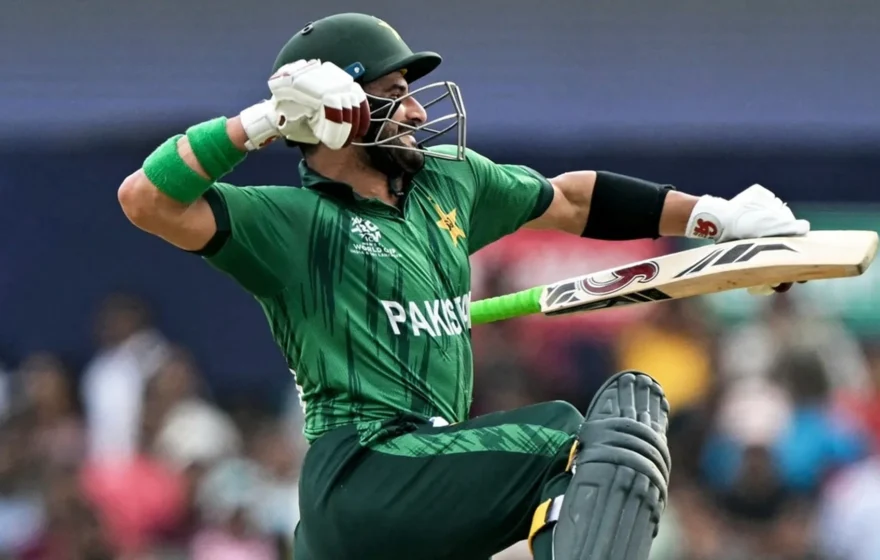
Pakistan captain Sahibzada Farhan has climbed to second place in the latest ICC men’s T20 international batting rankings, moving past India’s Ishan Kishan in the newest update. Farhan now sits on 883 rating points, one place higher than before, after Pakistan wrapped up their T20 series against Sri Lanka by two matches to one. The top of a world ranking is a small and fiercely contested place, and a move like this shows a batter in genuine form rather than enjoying a brief run of luck.
At the very top, India opener Abhishek Sharma holds first place with 897 points, strengthened by a century in the third T20 international against New Zealand. The gap between Abhishek and Farhan is fourteen points, close enough that one strong series from the Pakistan captain could bring the lead within reach, yet wide enough to show that the Indian opener has earned his place at the summit. Behind them, Kishan has slipped two places to third with 866 points, seventeen points behind Farhan. England’s Harry Brook is fourth on 793 points and his compatriot Jos Buttler is fifth on 789, which underlines how far ahead the leading trio sit, with more than seventy points separating third place from fourth.
For Pakistan, Farhan’s rise matters for more than the headline. A captain who is also his side’s highest-ranked batter carries a different kind of authority into a dressing room, and his form gives the team a reliable anchor at the top of the order. Rankings are not trophies, and no player wins a match on rating points alone, but they are a public record of recent form, and they shape how opponents plan.
The rest of Pakistan’s batting picture, however, is less comfortable. Saim Ayub has dropped one place to forty-third with 550 points, while Maaz Sadaqat has slipped two places to forty-sixth with 533 points. Former white-ball captain Babar Azam has fallen one spot to forty-eighth, Hasan Nawaz is down to fifty-first, and Salman Ali Agha has slipped to fifty-fifth. The one bright spot further down the list is Fakhar Zaman, who has moved up two places to seventy-ninth. Taken together, these movements paint a picture of a batting group in transition: one player surging towards the summit while several established names drift in the wrong direction, and that contrast is the challenge Pakistan’s coaches must now address.
The bowling rankings offer more encouragement. Pakistan spinner Abrar Ahmed has held on to joint third place with 695 rating points, sharing the position with England’s Adil Rashid. Ahead of them, Afghanistan’s Rashid Khan remains at the top with 733 points, followed by Australia’s Adam Zampa in second on 700, while Australia’s Nathan Ellis completes the top five on 675 points. Abrar’s presence in that company is significant because the leading bowlers in the shortest format are usually the ones who decide tight matches in the middle overs, and keeping a place among them shows that his control and variation continue to trouble batters.
Beyond Abrar, the bowling list shows a mixture of small rises and small falls. Pakistan fast bowler Salman Mirza has dropped one place to fourteenth with 635 points, while spinner Mohammad Nawaz has stayed in sixteenth place with 626 points. Shaheen Afridi has climbed one place to thirty-ninth with 572 points, and Sufiyan Muqeem has held his position with 532 points. Saim Ayub has slipped one place to fifty-fourth in the bowling list, Usman Tariq has kept sixty-sixth place with 498 points, and Shadab Khan has moved up two places to seventy-second with 486 points.
The all-rounder rankings add another layer to the story. Saim Ayub has kept second place in that list, behind Zimbabwe’s Sikandar Raza, who continues to lead the category, with the West Indies’ Roston Chase in third. Mohammad Nawaz has held joint thirteenth place alongside India’s Hardik Pandya, while Shadab Khan has climbed one place to twenty-fifth. Faheem Ashraf remains in fifty-ninth place, Salman Ali Agha shares sixty-second place with Namibia’s Ruben Trumpelmann, and Shaheen Afridi has kept seventy-fifth place. Saim’s second place in two separate lists is a quiet achievement in itself, because it reflects a player contributing with both bat and ball, and all-rounders of that kind give a captain flexibility that specialists cannot.
In the end, Farhan’s move to second place is both a personal milestone and a useful measure of where Pakistan stand. They have a world-class batter leading them, a spinner holding a place among the best bowlers on the planet, and an all-rounder ranked second in his discipline. They also have a group of batters who have slipped in the same update, and closing that gap is the work that lies ahead. Rankings change after every round of matches, and the next update will bring a new set of winners and losers, but for now Pakistan can point to the top of the batting list and see one of their own, fourteen points from the summit, with every reason to believe the climb is not yet finished.
