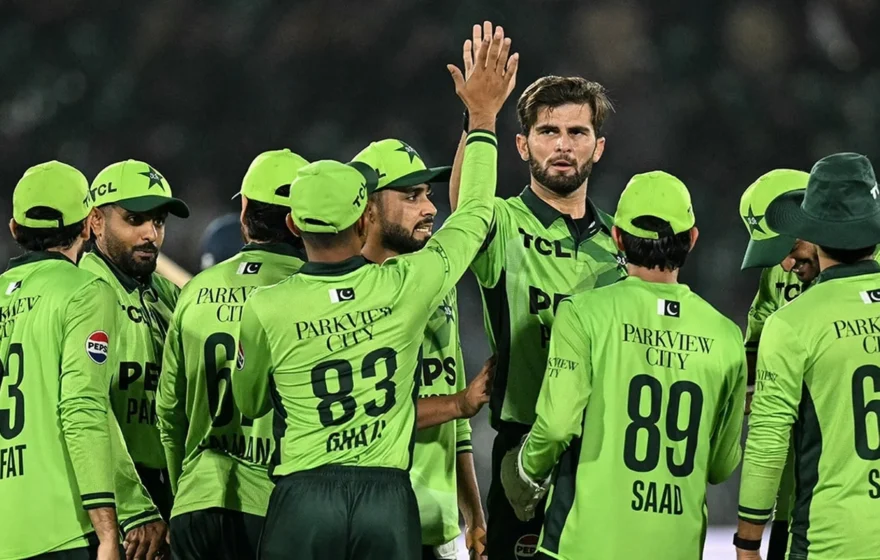
Pakistan’s latest ICC men’s one-day international rankings tell two very different stories at once, with the bowling attack producing encouragement and the batting line-up offering a warning. The newest weekly update, released during the home tri-series against England and Sri Lanka, has lifted captain Shaheen Shah Afridi into the top six bowlers in the world, while several of Pakistan’s most established batters have slid down the batting chart. It is a mixed return, with individual brilliance and collective inconsistency side by side in the same set of numbers.
The headline for Pakistan is Afridi’s climb. The left-arm fast bowler has moved up two places to sixth in the ODI bowling rankings after taking eight wickets in four matches in the tri-series. As captain, Afridi has been asked to set the tone with the new ball and to break partnerships in the middle overs, and eight wickets across four games suggests he has done that job consistently rather than relying on a single outstanding spell.
Behind him, the most striking rise belongs to a much younger name. Arafat Minhas has jumped fifteen places to sixty-eighth in the bowling rankings, on 435 rating points, after a six-wicket performance against England. A move of that size is rare for a player still establishing himself at international level, and it shows how quickly a strong showing against a leading side can change a young bowler’s standing. It also gives Pakistan a different threat in the middle overs.
Not every bowler has moved in the right direction. Haris Rauf has dropped nine places to twenty-ninth, while Naseem Shah has slipped six spots to fifty-third. Those falls do not erase their quality, but they show how unforgiving the rankings can be when wickets dry up. The most curious case is Abrar Ahmed, who has fallen one place to third despite not yet featuring in the tri-series. Rankings are not frozen when a player sits out, since others can overtake him by performing well, and inactivity can itself cost points. Afghanistan’s Rashid Khan has retained the top position, with South Africa’s Keshav Maharaj second, so Abrar sits just behind two of the most respected spinners in world cricket.
If the bowling picture is mixed, the batting picture is more concerning. Former captain Babar Azam has dropped two places to ninth after scoring 118 runs in four matches without producing a major innings. Babar’s standards are so high that a run of starts without a defining score is enough to cost him places, although ninth still leaves him inside the world’s top ten. Yet the direction will worry supporters, because Pakistan have so often relied on Babar to anchor an innings. When he is not converting, pressure shifts sharply onto those around him.
That pressure has also been felt by Salman Ali Agha, who has slipped one place to thirteenth. His tournament began with a century against Sri Lanka, but he managed only fifty-one runs in his next three matches. That contrast captures a wider problem: moments of brilliance have not yet become a habit, and rankings reward repetition, so three low scores after a hundred will always pull a rating back down. Mohammad Rizwan’s fall reflects selection as much as form. Left out of Pakistan’s ODI squad, he has dropped eight places to forty-second, since a player who is not in the team cannot add to his rating. Fakhar Zaman has slipped two places to forty-sixth, leaving Pakistan without a batter in the very highest tier of the list.
The exception, and in many ways the story of the update, is Shadab Khan. The all-rounder has climbed thirty-two places in the batting rankings to ninety-second, after his match-winning century against England. His unbeaten 113 at Lahore on 25 October rescued Pakistan from 154 for nine in pursuit of 242 and delivered a one-wicket victory. It was the highest score ever made in a one-day international by a batter coming in at number eight or lower, built on a record unbeaten last-wicket stand of eighty-nine with Haris Rauf. A jump of thirty-two places is the natural reward for such an innings: one extraordinary performance, against strong opposition, in a match Pakistan went on to win, carries far more weight than a quiet fifty in a comfortable victory.
Understanding that weighting helps explain why the list moves as it does. The ICC updates its men’s player rankings every week, weighing not only runs and wickets, but also the quality of the opposition, the state of the match, and the level of scoring around the player. A wicket in a tight game counts for more than one taken when the result is settled, and a century made while chasing under pressure counts for more than the same score made with the match already in hand. With the tri-series serving as preparation for the 2027 Cricket World Cup, this update is best read as a progress report rather than a final verdict. The challenge now is to turn individual gains into team momentum.
