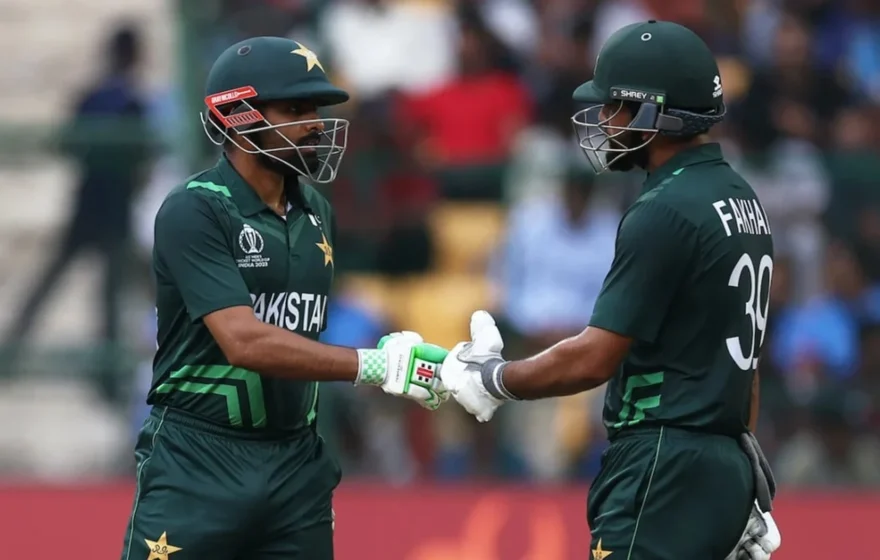
Pakistan batting coach Mike Smith has backed Babar Azam and Fakhar Zaman to rediscover their best form in Saturday’s tri-series final against Sri Lanka, insisting that he has no doubt at all that both senior batters will come good when the trophy is on the line. His message after the defeat in Lahore was deliberately calm and public: two players who have carried Pakistan’s batting for years should not be judged on one evening, and a final is the stage on which experienced players answer critics.
The need for that reassurance was clear from Tuesday’s scoreline. Pakistan, who had won their first three matches of the tri-series, were bowled out for just 110 in 25.3 overs against Sri Lanka at the Gaddafi Stadium, and the visitors chased the small target down with eight wickets to spare. Babar top-scored with 29, while Fakhar managed only five, and Sri Lanka’s left-arm fast bowler Dilshan Madushanka did much of the damage with a five-wicket haul. Kamindu Mendis then finished the job unbeaten on 62, leaving Pakistan with a defeat that was as comprehensive as it was unexpected.
Smith was asked directly whether Babar’s habit of getting started without going on to a big score had become a worry. He rejected the idea outright, arguing that the hardest part of batting at international level is surviving the early period at the crease, and that Babar has been doing that with surprising ease. Babar has made 118 runs in four innings in this tri-series without reaching a half-century, so every start has ended before it became the innings Pakistan needed. Smith’s point, though, was that a batter who keeps getting in is only one innings away from turning the story around, and that the difference between criticism and praise in this case is a single converted start.
The coach was equally firm about Fakhar, describing him as a world-class player who has proved his quality again and again over a long career. Fakhar’s job in this side is to give Pakistan a fast, confident start, and when that start has not arrived the pressure has travelled straight down the order. Smith acknowledged that dry spells happen to every batter, even the best ones, but he argued that Fakhar’s record means his form should be treated as a temporary dip rather than a decline. Once Fakhar is settled, he added, he has the power and the range of shots to take a match away from the bowling side in a handful of overs.
Smith was honest, however, about where Pakistan’s batting stands as a group. He put the collective at around seventy per cent of where it needs to be, a strikingly precise self-assessment from a coach who could easily have hidden behind general encouragement. Tuesday’s collapse, in his view, came from a mixture of poor shot selection and genuinely good bowling, with Pakistan never managing to build the partnerships and momentum that turn a difficult start into a competitive total. He also praised the middle order for rescuing the side when the top order has failed.
Smith also refused to blame the pitches in Lahore for Pakistan’s troubles, a point he made with unusual bluntness. International players, he said, are expected to read conditions and adapt to them, and Pakistan had simply not adjusted as well as they should have on Tuesday. It was an admission rather than an excuse, and it fits with the rest of his message: the problems were in shot choice and adaptation, both of which can be corrected quickly, rather than in conditions beyond the players’ control. That distinction will matter in the final, where similar conditions are likely to demand the same discipline.
Looking ahead, Smith insisted that losing the match immediately before a final would count for nothing once the new game begins. A final resets the contest, he argued, because both teams start again on equal terms and the side that stands up best under pressure lifts the trophy. For Pakistan, that means Babar and Fakhar do not need to prove anything over a whole series in one innings; they need to produce one decisive contribution at the right moment. If Babar converts a start and Fakhar gives the innings early momentum, the middle order that has already shown it can rescue Pakistan will be playing with freedom rather than under rescue duty.
In the end, Smith’s defence of his two senior batters is also a gamble on experience. Younger players can win matches, but finals are often decided by players who have been in that pressure before and know how to wait for their moment. Babar’s calm method at the crease and Fakhar’s ability to change a game quickly are different strengths, yet both point in the same direction: Pakistan do not need a new plan for the final so much as they need their proven players to execute the old one. If they do, Tuesday’s 110 all out will be remembered as a warning that arrived in time; if they do not, Smith’s show of faith will be judged by the scoreboard alone.
