Pakistan is heading into a split weather picture over the next day, with dry conditions dominating most of the country while the far north turns colder, cloudier and, in places, wet. The Pakistan Meteorological Department has said that dry weather is likely across most parts of the country during the next twenty-four hours, but that upper Khyber Pakhtunkhwa and Gilgit-Baltistan can expect light rain together with snowfall over the mountains. For people living in the plains, the forecast will feel familiar for this time of year: settled, dry days, cool mornings and nights, and a gradual slide towards winter. For people in the hills, it is a reminder that the season is already changing at altitude, even while the lowlands remain warm and dry.
Islamabad captures that in-between feeling well. The capital is expected to stay dry, with coolness lingering in the morning and at night, a pattern that has become typical as autumn gives way to winter in the Potohar region. Days may still feel pleasant in the sunshine, but the drop in temperature after sunset is now unmistakable.
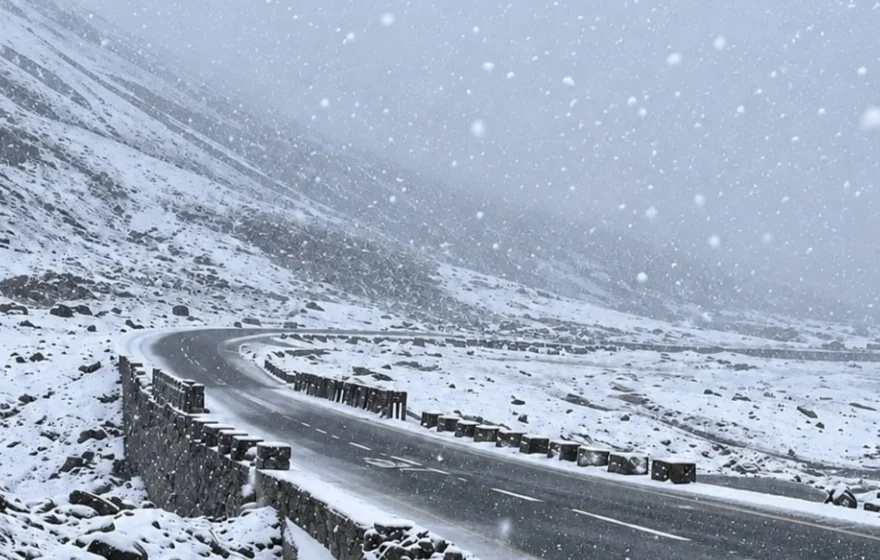
The most active weather in this forecast is concentrated in the north. Light rain is anticipated in Chitral, Dir, Swat, Kohistan and Kurram, with snowfall expected over the higher mountains of upper Khyber Pakhtunkhwa and Gilgit-Baltistan. Later in the night, light rain is also likely in Dera Ismail Khan and Lakki Marwat, extending the wet spell a little further south. Taken together, the forecast describes a fairly limited but meaningful disturbance: not a widespread storm, but enough moisture reaching the northern mountains to produce rain in the valleys and snow on the peaks.
Further south, the picture is quieter but not without its own seasonal concerns. Morning fog and smog are expected in Lahore, Faisalabad, Multan, Gujranwala and Sialkot, a combination that has become a recurring feature of late autumn and winter in Punjab. Fog alone can slow early morning travel and reduce visibility on motorways and city roads, while smog adds a haze that lingers through the day and affects air quality. Murree and Galyat, by contrast, will remain partly cloudy with cold weather in the morning and at night, in keeping with their hill-station character at this time of year. The difference between the Punjab plains and the nearby hills shows how sharply weather can vary over a short distance in Pakistan, with altitude doing much of the work.
Northern Balochistan follows a similar cold pattern, with cold weather expected and light rain forecast in Quetta, Chaman, Pishin and Zhob. Most parts of Sindh, meanwhile, will remain dry, while the southern districts are likely to experience hot weather during the day. That north-south contrast is one of the most striking aspects of this forecast: snow on northern mountains, fog in Punjab, and heat still holding on in southern Sindh, all on the same day. It reflects the sheer size and varied geography of the country, where a single national forecast inevitably contains several very different local stories.
Karachi remains firmly in the warm camp for now. Heat continues to prevail in the city today, but the Met Office has forecast that the weather will improve after November 5 due to westerly winds. Westerly winds are the systems that sweep in from the west and often bring cooler air and, in the north, rain and snow. Their arrival is closely watched in Pakistan because they mark the transition from the long, dry autumn towards the winter rainfall season. The suggestion that Karachi may feel some relief after November 5 therefore fits a familiar seasonal rhythm, even if the city itself is unlikely to see the rain and snow affecting the north.
What makes a forecast like this matter is not only the day-to-day comfort of residents, but the wider seasonal context. Rain and snow in the northern mountains in November help build the snowpack that feeds rivers in the months ahead, and they matter for water supplies, agriculture and hydropower further downstream. At the same time, dry weather across most of the country means that farmers, travellers and city authorities are dealing with a different set of issues: dust and haze in the plains and the need for care on foggy mornings. The forecast does not promise a major change for the plains, and that in itself is useful information for planning.
In the end, this is a forecast of contrasts rather than extremes. Most of Pakistan stays dry, the north turns wet and cold at altitude, Punjab wakes to fog and smog, and the south holds on to its heat for a little longer. That mixture is characteristic of early November, a month when winter is already established in the mountains but has not yet fully arrived in the plains.
